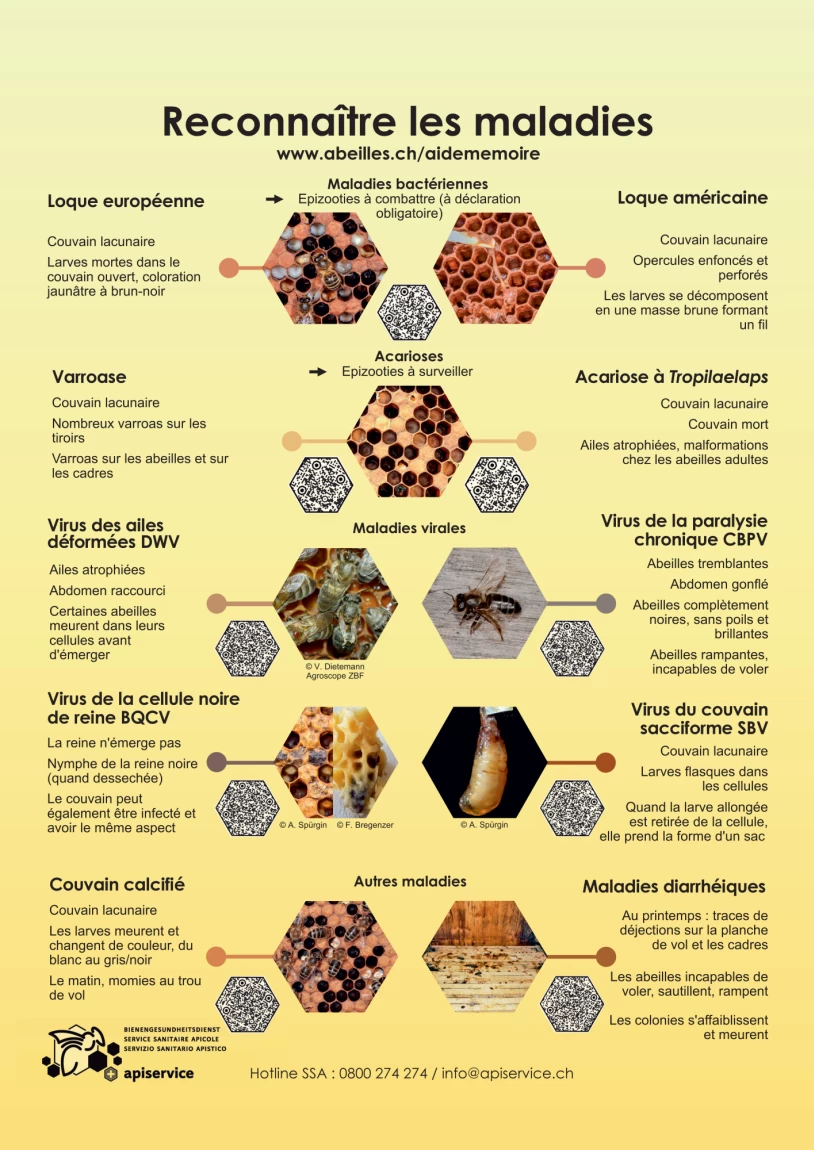
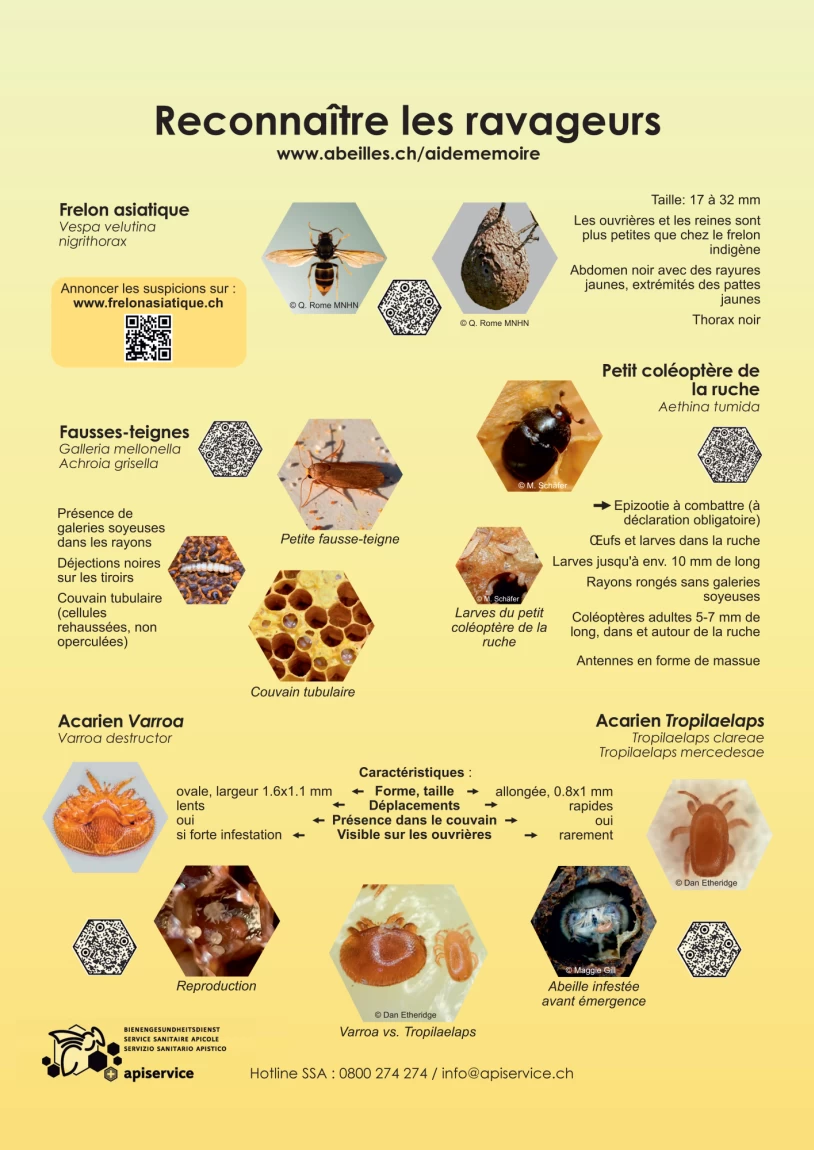
Aide-mémoire : 2.5 Maladies diarrhéiques

Les maladies diarrhéiques figurent parmi les problèmes sanitaires les plus fréquents chez les colonies d’abeilles, en particulier à la fin de l’hiver et au début du printemps. Elles traduisent des troubles digestifs ou des conditions d’hivernage inadéquates et peuvent fortement affecter le développement de la colonie. Les informations suivantes sont basées sur l’aide-mémoire officiel 2.5 du BGD/SSA.
Aide-mémoire officiel (BGD / SSA) – Résumé
Aide-mémoire : 2.5 Maladies diarrhéiques
- Définition : Les maladies diarrhéiques se manifestent par des traces de déjections dans et autour de la ruche, accompagnées d’un affaiblissement général de la colonie.
- Causes possibles :
- Qualité insuffisante ou fermentation des réserves alimentaires.
- Périodes prolongées de froid empêchant les vols de propreté.
- Humidité excessive et mauvaise hygiène de la ruche.
- Présence d’agents pathogènes tels que Nosema.
- Conséquences pour la colonie :
- Souillure des cadres et de l’intérieur de la ruche.
- Affaiblissement des abeilles et diminution de leur longévité.
- Développement du couvain perturbé et perte de force de la colonie.
- Mesures recommandées :
- Amélioration ou remplacement des réserves alimentaires.
- Maintien de ruches sèches et bien ventilées.
- Facilitation des vols de propreté lorsque les conditions météo le permettent.
- En cas de suspicion de nosema, procéder à des analyses complémentaires selon l’aide-mémoire.
- Point important :
- Une analyse précise des causes est indispensable avant toute intervention ciblée.
► Ouvrir le PDF officiel de l’aide-mémoire (FR)
► Vers la page officielle des aide-mémoire (abeilles.ch)
Remarque : Rubrique Santé des abeilles → 2.5 « Maladies diarrhéiques ».
Résumé établi sur la base de l’aide-mémoire 2.5. Dernière vérification : 01/2026.
Voir aussi :
- Revue des parasites Nosema chez les abeilles
- Principes du nourrissement des abeilles
- Aide-mémoire : 4.1 Hygiène
- Reconnaître les maladies des abeilles